SEO, AEO, GEO and AIO: get Google and AI to recommend your business
By Steve · updated July 2026
Your customers no longer only search on Google: they also ask ChatGPT, Gemini and Perplexity which business suits them. Showing up well today depends on four acronyms that sound like alphabet soup but are simple at heart: SEO, AEO, GEO and AIO. In this workshop I tell you what each one is and its role in your business, how they're generated, how to optimize your business with all of them, what the llms.txt is, and I leave you prompts to test and improve your visibility in AI.
- SEO brings you traffic; AEO makes you the answer; GEO gets AI to recommend you by name; AIO is the umbrella that joins it all with trust signals.
- Google and AI build your image from clues across the web: clear identity, consistent NAP, FAQ, schema, reviews and mentions.
- Optimize in order: first your Google Profile and reviews, then identity and site, then llms.txt and mentions, and measure.
- The llms.txt is a sign for AI at yourdomain.com/llms.txt: it helps it understand you, it's not magic on its own.
- Test your visibility free with prompts in ChatGPT, Gemini and Perplexity, and use AI to generate your FAQ, your identity sentence and even your llms.txt.
- There's no paid shortcut to first place in AI: what works is clear, trustworthy digital presence.
The four acronyms, no fluff, and their role in your business
I'll save you the confusion. These four acronyms describe where and how your customers find you, and each does a different job for your business:
- SEO (Search Engine Optimization): getting Google to show you in its regular results, the blue links. Its role: bring you traffic, people who click and land on your site or listing.
- AEO (Answer Engine Optimization): being the answer. When someone asks something specific (to Google, to a voice assistant), your content is what's used to answer, often without them clicking.
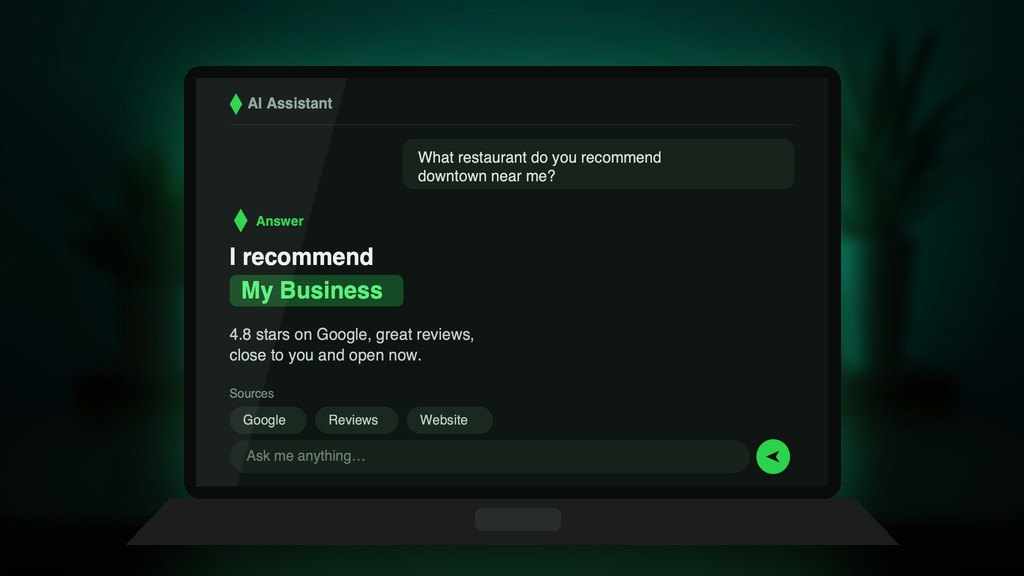
- GEO (Generative Engine Optimization): getting generative AI (ChatGPT, Gemini, Perplexity, Copilot) to cite and recommend you by name inside its answer. Its role: to convert, because a recommendation weighs more than a link.
- AIO (AI Optimization): the umbrella over all of the above. End-to-end optimization for the AI ecosystem: it joins AEO and GEO and adds the trust signals (reviews, mentions, consistent presence) that make AI recommend you with confidence.
How they're generated: the signals Google and AI read
Neither Google nor AI "sees" your business like a person. They build their idea of you by piecing together clues from all over the web. The clearer and more consistent those clues, the more they show you and the more they recommend you. These are the ones that truly weigh:
- A clear identity. That it's understood in one sentence what you are and where: "dental clinic in Austin", not "health solutions".
- Consistent data (NAP). Name, address and phone identical on your site, on Google, in directories and on social.
- Content that answers real questions. An FAQ section with short answers to what people ask before buying. That feeds AEO and GEO.
- Structured data (schema). Invisible code that tells search engines and AI what each thing on your page is.
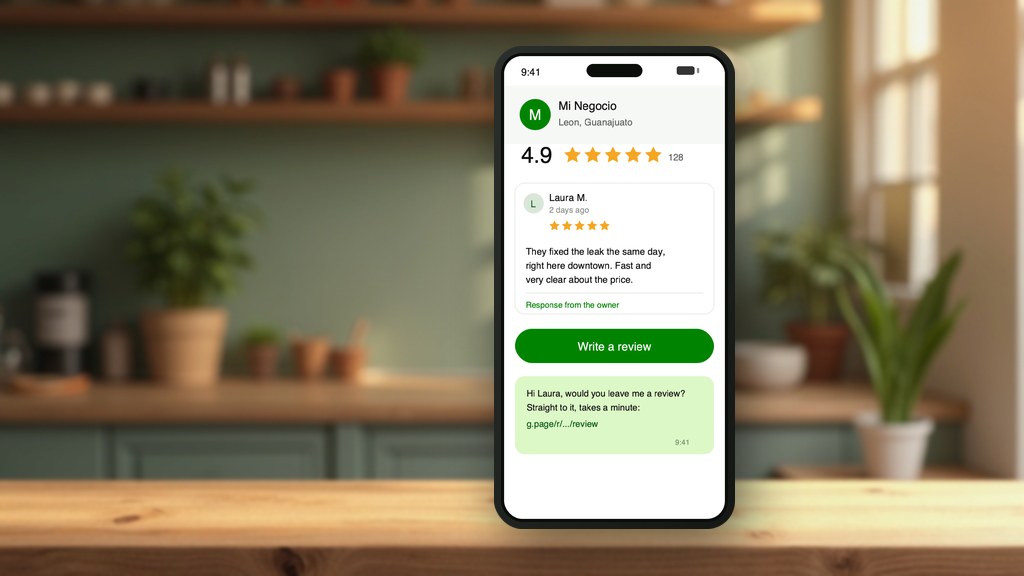
- Reviews. Many, good and recent: the strongest signal that you're worth recommending.
- Third-party mentions. Showing up in directories, articles and other people's sites confirms to AI that you really exist.
How to optimize your business with all this, in order
You don't need to do it all at once or have a big-company budget. It's concrete work, and there's an order that pays off faster:
- 1. Local base: get your Google Business Profile complete and ask for reviews every week. It's where AI pulls much of what it knows about you.
- 2. Your identity and NAP: define your business in one sentence and put it identically everywhere.
- 3. Your site: a website with an FAQ and structured data. Without a site, for AI you barely exist.
- 4. Your llms.txt: the file that explains your site to AI (I break it down below).
- 5. Mentions: aim to show up in local directories and partners' articles.
- 6. Measure: check every few weeks whether AI already names you, and adjust.
llms.txt: the file that explains your site to AI
The llms.txt is a simple text file that lives at the root of your site (yourdomain.com/llms.txt). Think of it as a sign written for artificial intelligence: it tells it, cleanly and in order, what your business is, what you offer and which are your important pages.
It's a cousin of robots.txt (which talks to search engines), but made for AI models. It's not mandatory or magic, and on its own it won't rank you. What it does is make it easier for AI to understand your site without guessing, and that helps it describe and cite you better.
The key: that it's clear, true and consistent with the rest of your presence. A well-made llms.txt is a nudge; the base is still clear identity, reviews and content that answers.
Prompts to test (and improve) your AI visibility
This is the part almost nobody uses and it's free. Open ChatGPT, Gemini or Perplexity and try it yourself. First, to measure whether they already recommend you:
- "What [your type of business] do you recommend in [your city]?" Notice if you show up and who does.
- "Give me the best options for [your service] near [your area] and why." Note which signals they mention for the ones that appear.
- "What do you know about [your business name]?" If AI gets it wrong or knows nothing, that's your identity and data work.
Prompts to generate content that makes you visible
And now for your own AI model to help you generate the signals you're missing (always review what it produces, in your voice):
- "Write 10 frequent questions a customer asks before buying [your service], with short, clear answers." Use them as FAQ on your site.
- "Write my business description in a single sentence: what I do, for whom and where." That sentence goes identically everywhere.
- "Give me 5 blog topics that would answer real doubts of my [your field] customers in [your city]."
- "Generate a draft llms.txt for my business with this data: [name, field, city, services, key pages]." Then you review it and upload it.
Beware of anyone selling magic "AI ranking"
There are already people selling "AI positioning" as if it were a secret, expensive trick. I'll save you the money: almost everything that works to get AI to recommend you is good digital presence, done well. There's no secret lever to buy.
AI doesn't keep a magic list of businesses: when someone asks, it retrieves information from the open web, your Google Profile and your site, and builds the answer from what it finds. If your information is clear, consistent and trustworthy, it takes you into account. Anyone promising you a paid shortcut to "first place on ChatGPT" is selling smoke.
Work on your Google and AI visibility with me, live
The workshop is live and in a group, over video call: I measure how Google and AI see you today, and build your SEO, AEO, GEO and AIO plan with you, step by step. Sign up and I'll email you the date as soon as I have the next session set.
- Your website address, if you already have one.
- The 3 searches you'd like to be found with.
- The names of 2 competitors who show up ahead of you.
No time limit: each session runs as long as it takes, and I stay until your questions are answered.
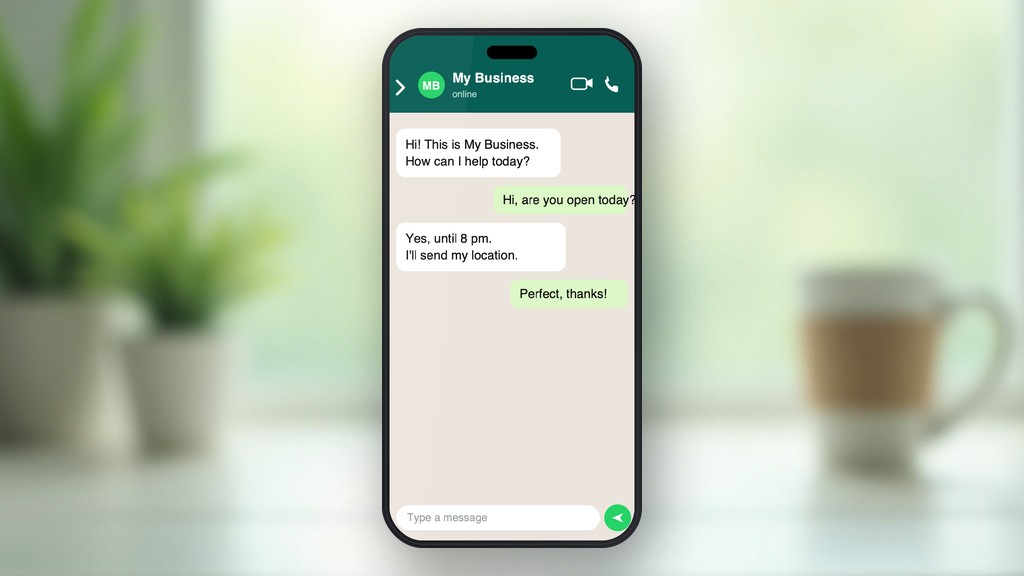
Free. I open each group once 15 people sign up and I announce the date on my WhatsApp channel. Sign up and follow the channel so you don't miss the next session.
Frequently asked questions
What's the difference between SEO, AEO, GEO and AIO?
SEO is showing up in Google's classic results (the blue links) to bring traffic. AEO is being the direct answer to a question. GEO is getting generative AI (ChatGPT, Gemini, Perplexity) to cite and recommend you by name. AIO is the umbrella: end-to-end optimization for the whole AI ecosystem, joining AEO and GEO with trust signals like reviews and mentions.
What is llms.txt and do I need it?
It's a text file at the root of your site (yourdomain.com/llms.txt) that explains to AI models what your business is and which are your important pages, cleanly. It's not mandatory and won't rank you on its own, but it makes it easier for AI to understand you and cite you better. It's worth having once you have a site with real content you want AI to read well.
How do I know if AI already recommends my business?
Test it yourself, free: open ChatGPT, Gemini and Perplexity and type the question a customer would ask, like "what [your type of business] do you recommend in [your city]?". Notice if you show up and who does. Repeat every few weeks to see if you start slipping in. For a fuller measurement, my AI analyzer (OneExample.ai) checks your visibility across several engines at once.
Do I need to pay a lot to "rank in AI"?
No. Be wary of anyone selling a secret, expensive trick. Almost everything that gets AI to recommend you is good digital presence: clear identity, consistent data, reviews, content that answers and a few mentions. It's concrete work, not a magic lever you buy.
Want to know if AI already recommends you? Measure it free
Start with your Exploration and Analysis. Requesting it costs nothing, and I'll tell you what's right for you first.