What a Small Business Website Has to Do Before It Has to Look Good
By Steve · updated November 2026
Ask most business owners what they want from a website and they say some version of "professional-looking." Ask what happens after someone visits it and the answer gets vague fast. That gap is the whole problem, and it's why so many attractive websites bring in nothing. There's an order of operations most people skip, and the look comes last in it.
- Looks come last. The order that actually works starts with one clear action.
- Customers check the boring basics first: hours, location, what you sell, how to reach you.
- A static build outperforms a flashier database-driven site on speed, security and how AI tools read it.
The question almost nobody asks before building anything
What is the one action you want a visitor to take? Call, message, book, or buy. Pick one.
Most sites try to do everything at once: sell, inform, impress and collect an email, all on the same homepage, and end up doing none of it clearly. A visitor with five competing options usually picks none of them.
Answer that one question first, and the rest of the site starts building itself around it instead of against it. If you're still deciding between a single focused page and a full multi-section site, I've laid out how to choose in web page or full website.
What has to happen in the first few seconds
A visitor decides in seconds whether this is the right business and whether to stay. Three things have to be obvious immediately: what you do, who it's for, and what to do next.
That means your headline names the specific thing you fix. It means the action you picked in the last section is visible without scrolling. Everything else on the page exists to support those three things.
Get that right, and the page has already done more work than most redesigns manage.
The couple running the counter, and what their customers actually check first
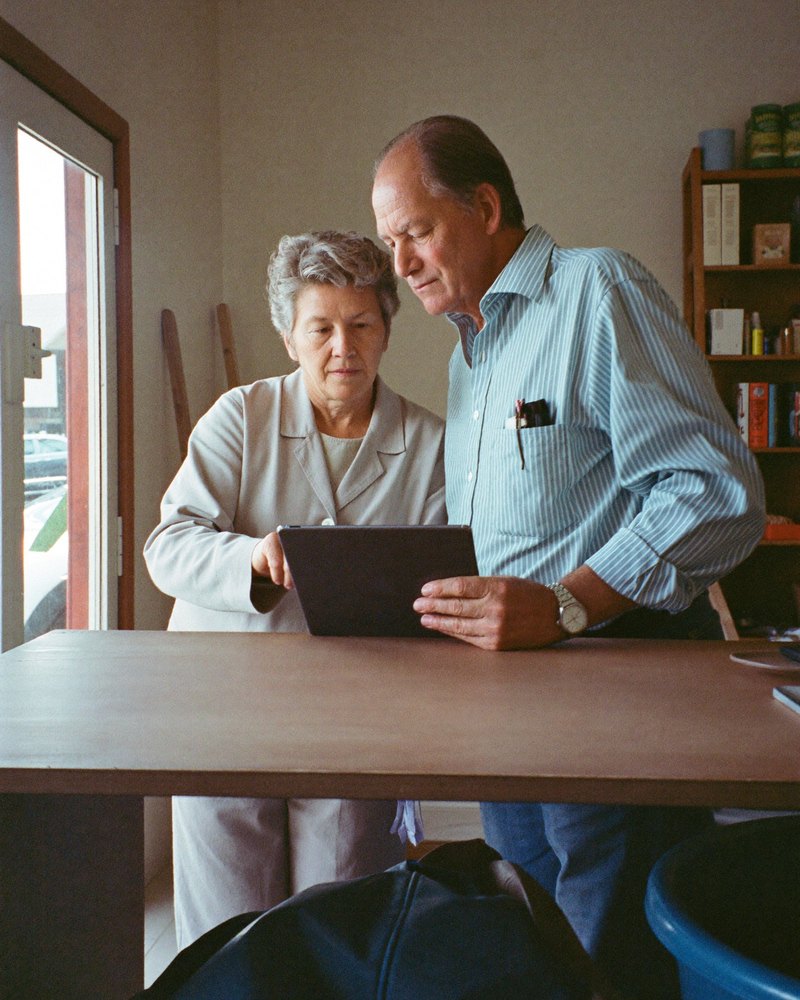
Picture a couple who've run a hardware store for years, checking their site together on a tablet behind the counter. Their customers aren't judging the design. They're checking three things fast: are you open right now, do you carry what I need, and can I actually reach you.
That's true for almost every small business. Hours, location, phone number and what you actually sell have to be found without hunting, on a phone screen, by someone standing in a parking lot deciding whether to drive over.
Once those basics are unmissable, the rest of the page is free to do its real job: convincing someone who already knows what you do to choose you specifically.
The reveal: a static build beats a database for almost every small business
Here's the part that never shows up in a first look at a site: a site built as plain static pages, instead of a database-driven platform, loads faster, breaks less, and has nothing for a hacker to break into because there's no login screen or database to attack.
That speed matters twice: to the visitor who leaves if a page is slow, and to search engines and AI tools that read a fast, well-structured page more easily than a bloated one. The tradeoff people worry about, needing a developer for every small change, isn't automatic; a well-built static site can still be edited without touching code. I go deeper on what actually drives the price of a site like this in how much a website really costs, and on the platform-lock-in question in the website builder question nobody answers honestly.
Curious what your current site is actually built on? Run the free audit, and it's the part that decides whether you're still happy with the choice a year later.
Where trust actually gets built on a page
Once the foundation is solid, trust is what fills the rest of the page: reviews, real photos of the actual business, and answers to the specific worry a customer has before they call.
The words that build trust are the ones answering an actual question someone typed into Google before they ever found you. Write toward that question, in plain language, and the page starts doing work a brochure never could.
That's most of the substance. Here's what to do with all of it before you build or rebuild anything.
What to check before you build or rebuild anything
Run your current site through a free check before spending on a redesign. It'll tell you what's actually broken versus what just looks dated, which are two very different problems with two very different price tags.
Then answer the one action question from the start of this, in writing, before anyone touches design. A page built around a clear answer converts better than a page built around a mood board.
- Pick the one action you want a visitor to take, in writing.
- Make hours, location, phone and what you sell impossible to miss.
- Check speed and structure before you judge a site by its looks.
Frequently asked questions
Do I need a website if I already have a Google Business Profile?
Yes. A profile is where you're discovered nearby, and a site is where a visitor decides whether to trust you and takes the next step. They do different jobs, and most businesses need both.
How many pages does a small business website need?
Fewer than most people assume. One clear page with a single goal often converts better than a large site with sections nobody finishes reading. Start small and grow it once you have content worth adding.
Should I build it myself with a free builder?
It depends on who'll maintain it and how the platform locks you in. Check what happens to your content and your domain if you ever want to leave, before you build anything on it.
Does a website help with AI tools recommending my business?
A structured, accurate site gives AI tools something real to cite when someone asks who to hire. A thin or outdated site gives them nothing, and they recommend whoever gave them more to work with.
How long does it take to get a small business website live?
It depends mostly on how ready your content is going in. A focused page can move faster than a full multi-section site, since there's less to write and approve before it launches.
I want a site that brings customers in
Start with your Exploration and Analysis. Requesting it costs nothing, and I'll tell you what's right for you first.